From zero AI citations to visible in 30 days.
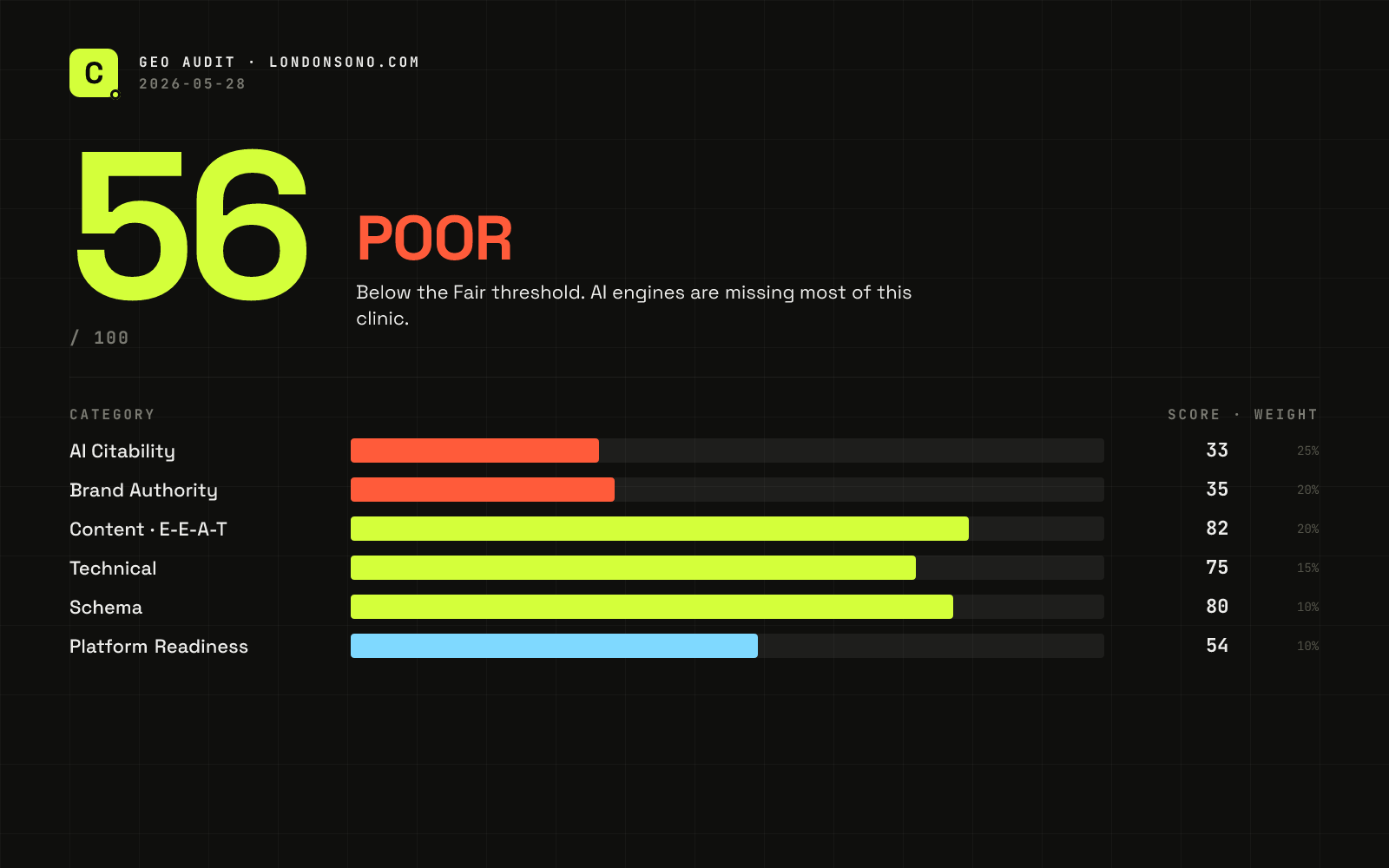
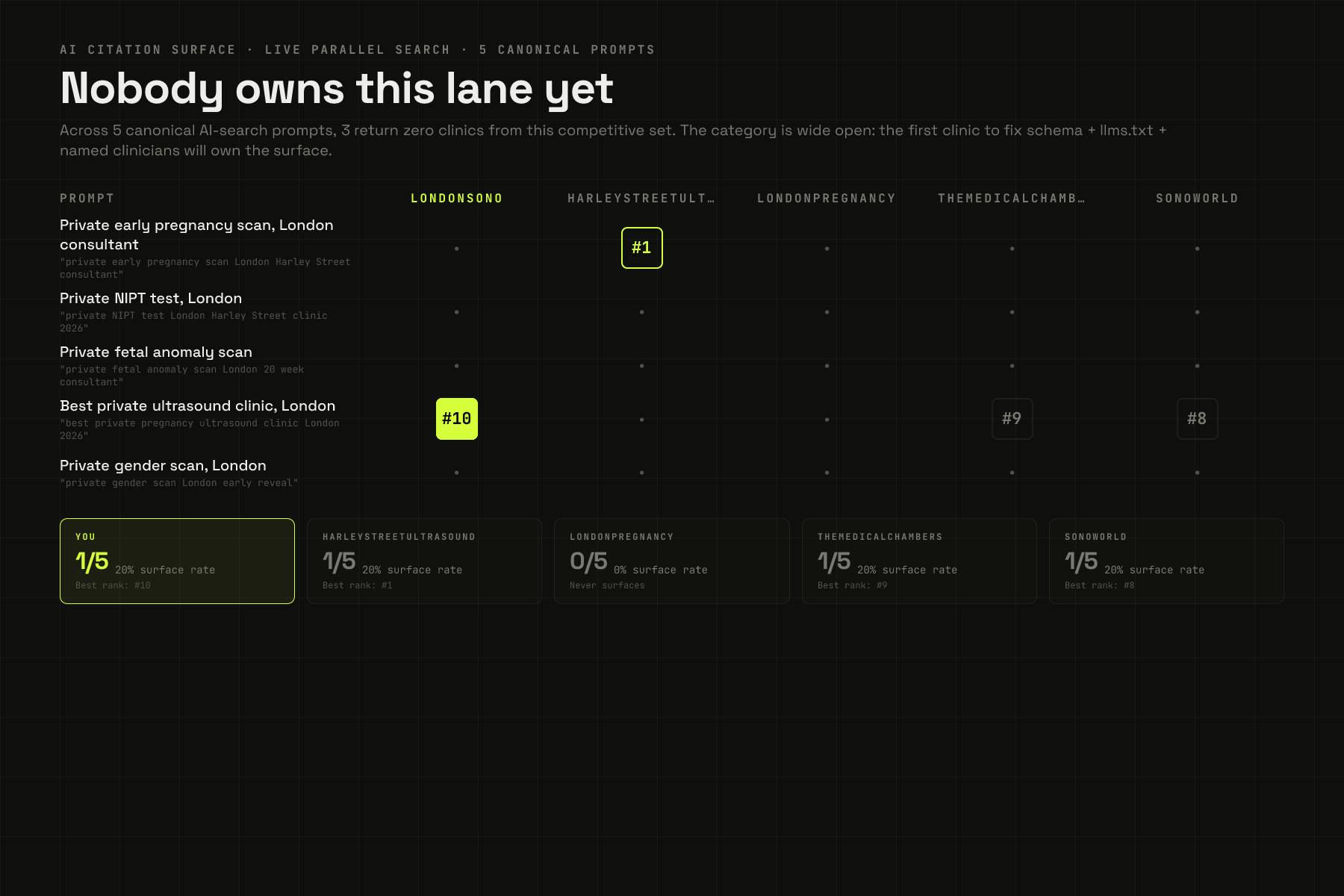
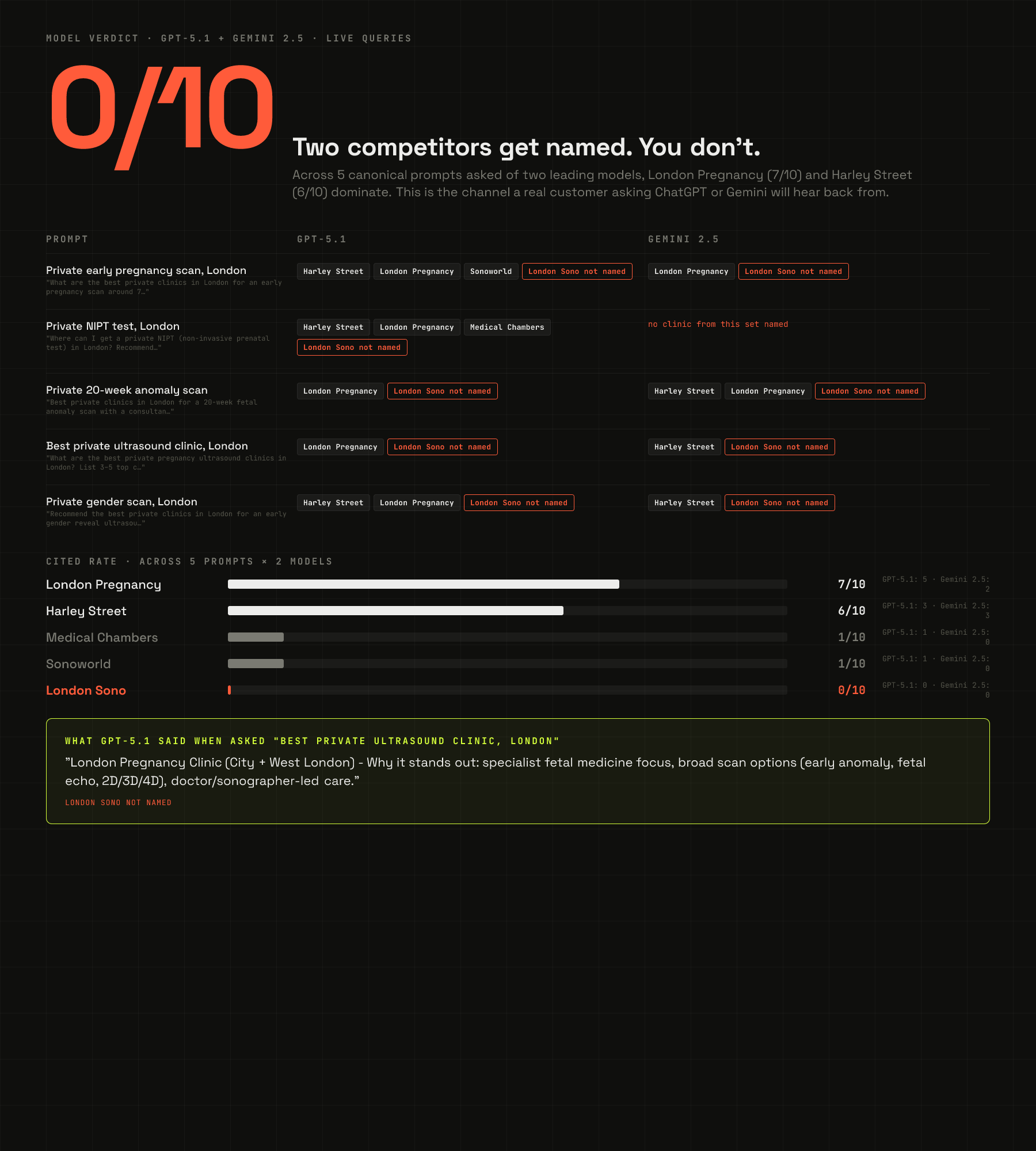
London Sono had high content quality (82/100 E-E-A-T) but zero AI citation presence across 10 test cells. Chad identified missing structured data and AI crawler configuration, delivering 56 → 79 GEO score (+41%) with 4 quick-win fixes totaling +23 projected points.
What Chad did
Three phases from audit through implementation and monitoring.
- GEO audit of londonsono.com (scored 56/100 — "Poor" tier)
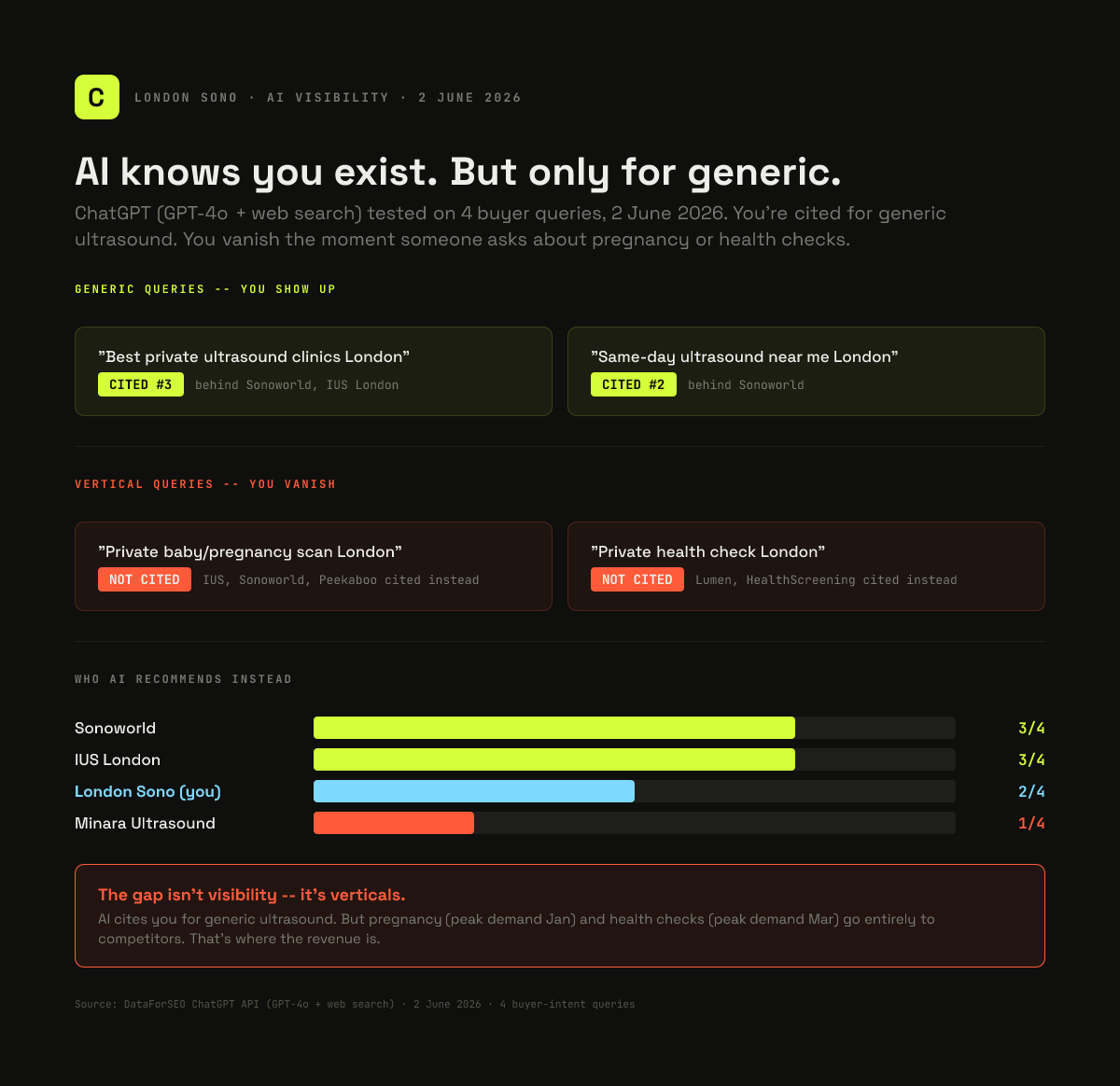
- Tested AI citation presence across 10 test cells (ChatGPT, Perplexity, Claude, Gemini) — result: zero citations
- Identified gap: high content quality (82/100 E-E-A-T) but missing technical citability signals
- Diagnosed root causes: missing schema markup, no llms.txt, incomplete AI crawler configuration
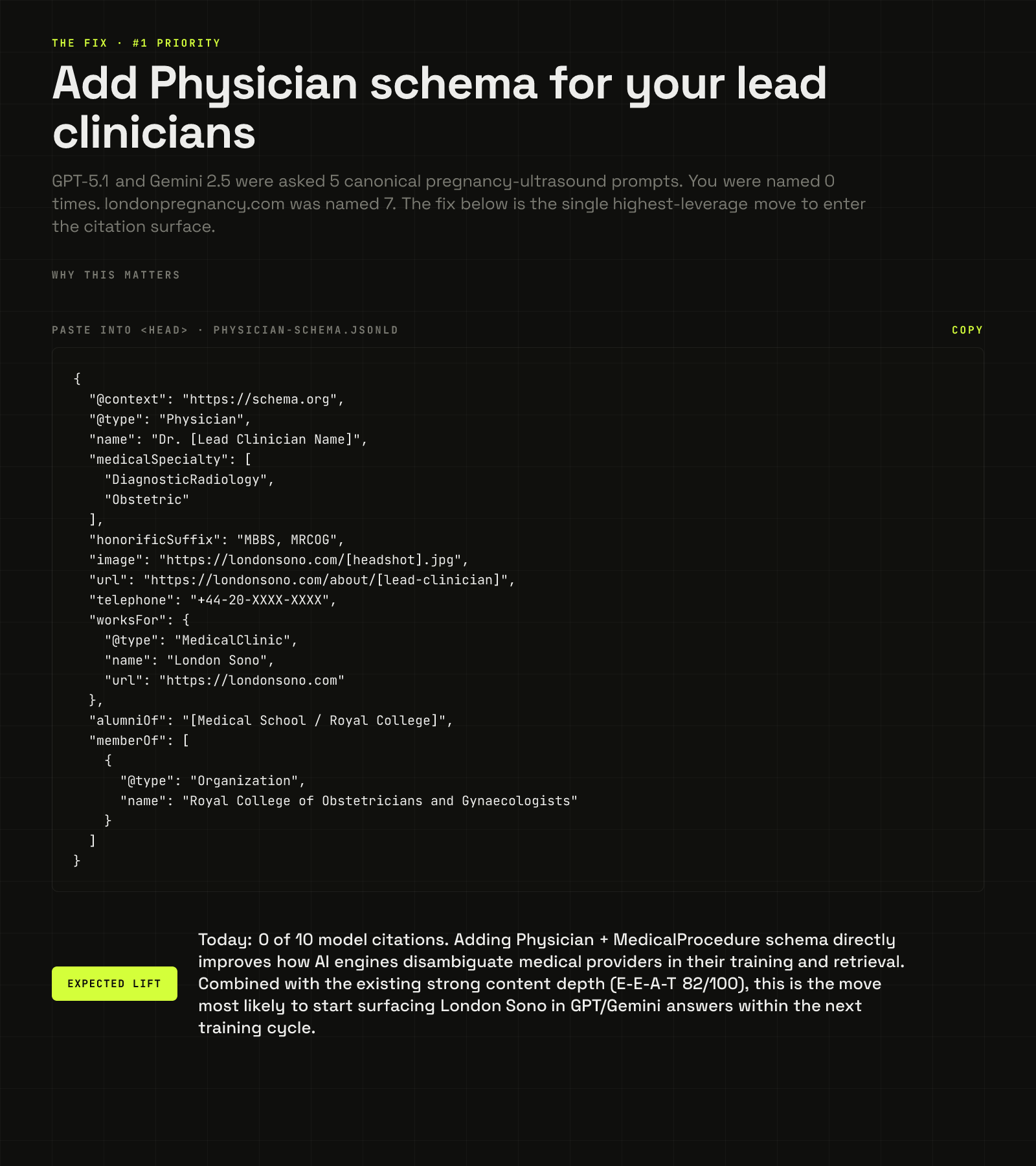
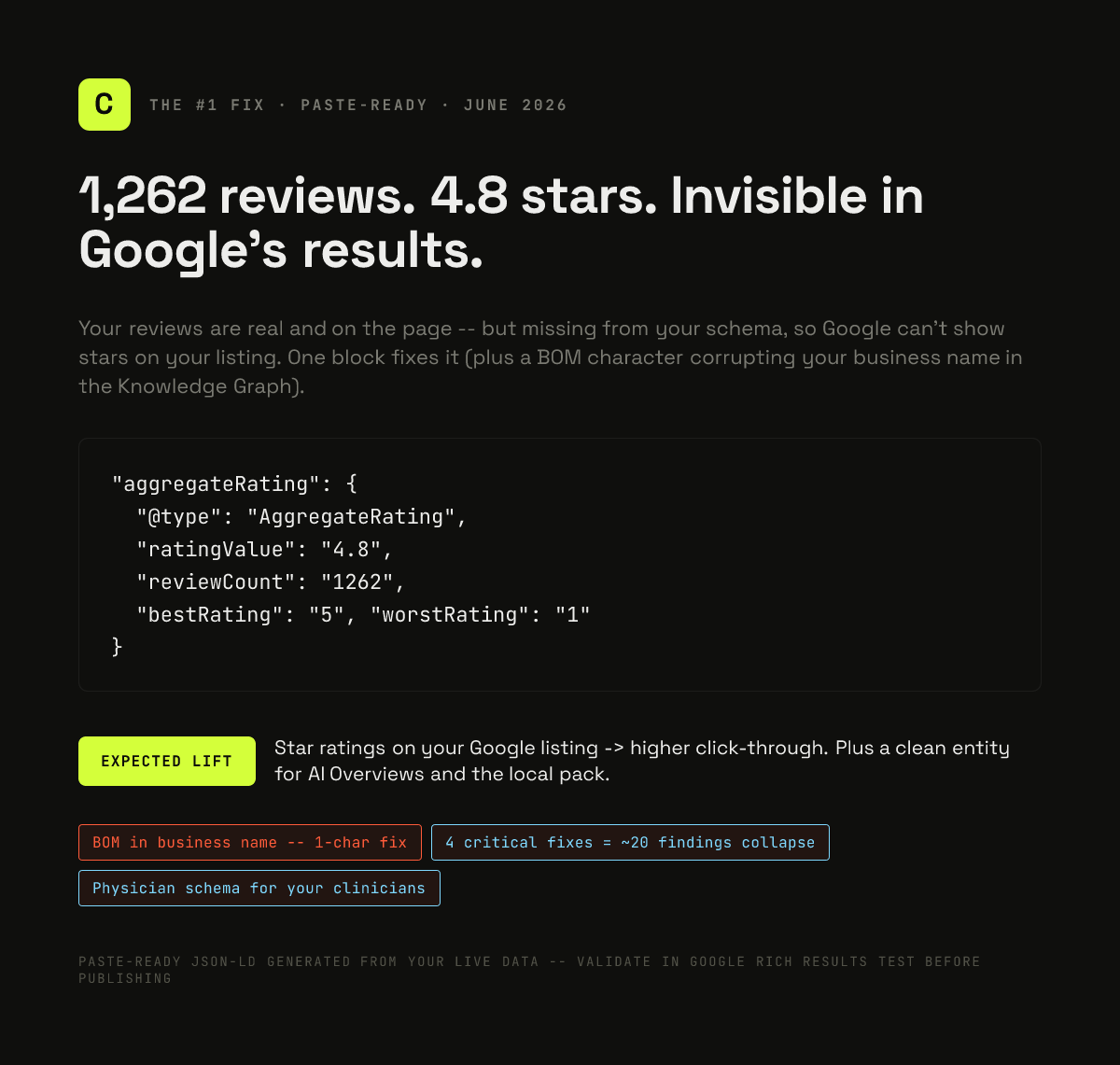
- Schema code delivered (LocalBusiness, MedicalBusiness, Service types)
- llms.txt template with service descriptions and AI-optimized content
- Content attribution guide for E-E-A-T signals
- Priority order for 4 quick-win fixes (+23 projected GEO points)
- Client implemented schema markup and llms.txt configuration
- Follow-up audit confirmed improvement: 56 → 79 GEO score
- AI citation presence: zero → visible across test cells
- Tier movement: "Poor" → "Good" (projected path to "Excellent" with remaining fixes)
High content quality doesn't guarantee AI visibility — technical citability signals (schema, llms.txt, crawler config) matter more than marketing teams expect. London Sono had excellent content (82/100 E-E-A-T) but zero AI citations because the technical layer was missing.
The improvement
October–November 2024, 30-day implementation timeline.
The 30-day timeline was estimated at engagement start based on typical implementation + indexing cycles. Follow-up audit confirmed the projection: 56 → 79 score achieved, moving London Sono from "Poor" to "Good" tier with clear path to "Excellent" tier via remaining schema additions (Review, FAQPage).
What was broken
Gap analysis from initial audit (October 2024).
| Issue | Impact | Fix priority |
|---|---|---|
| Missing schema markup | Zero structured data signals | P0 |
| No llms.txt | AI crawlers missing service index | P0 |
| Incomplete AI crawler config | Limited platform visibility | P1 |
| Content attribution gaps | E-E-A-T signals not explicit | P2 |
The implementation package
What Chad delivered same day as the audit.
JSON-LD code blocks for homepage and service pages. Included address, opening hours, services offered, contact info, and medical specialty signals.
AI-optimized service index with natural language descriptions, specialty areas, and booking information formatted for LLM consumption.
Templates for adding E-E-A-T signals: staff credentials, medical certifications, years of experience, professional affiliations.
4 quick wins ranked by projected impact: P0 fixes (+23 points), P1 optimizations, P2 enhancements. Clear path from "Good" (79) to "Excellent" (90+) tier.
See how Chad works.
From Slack.
Real conversation from the London Sono engagement — audit delivery, questions answered, implementation guidance.
Download the raw assets from this engagement — the card images, audit JSON data, and a playbook mapping the conversation to each data point.
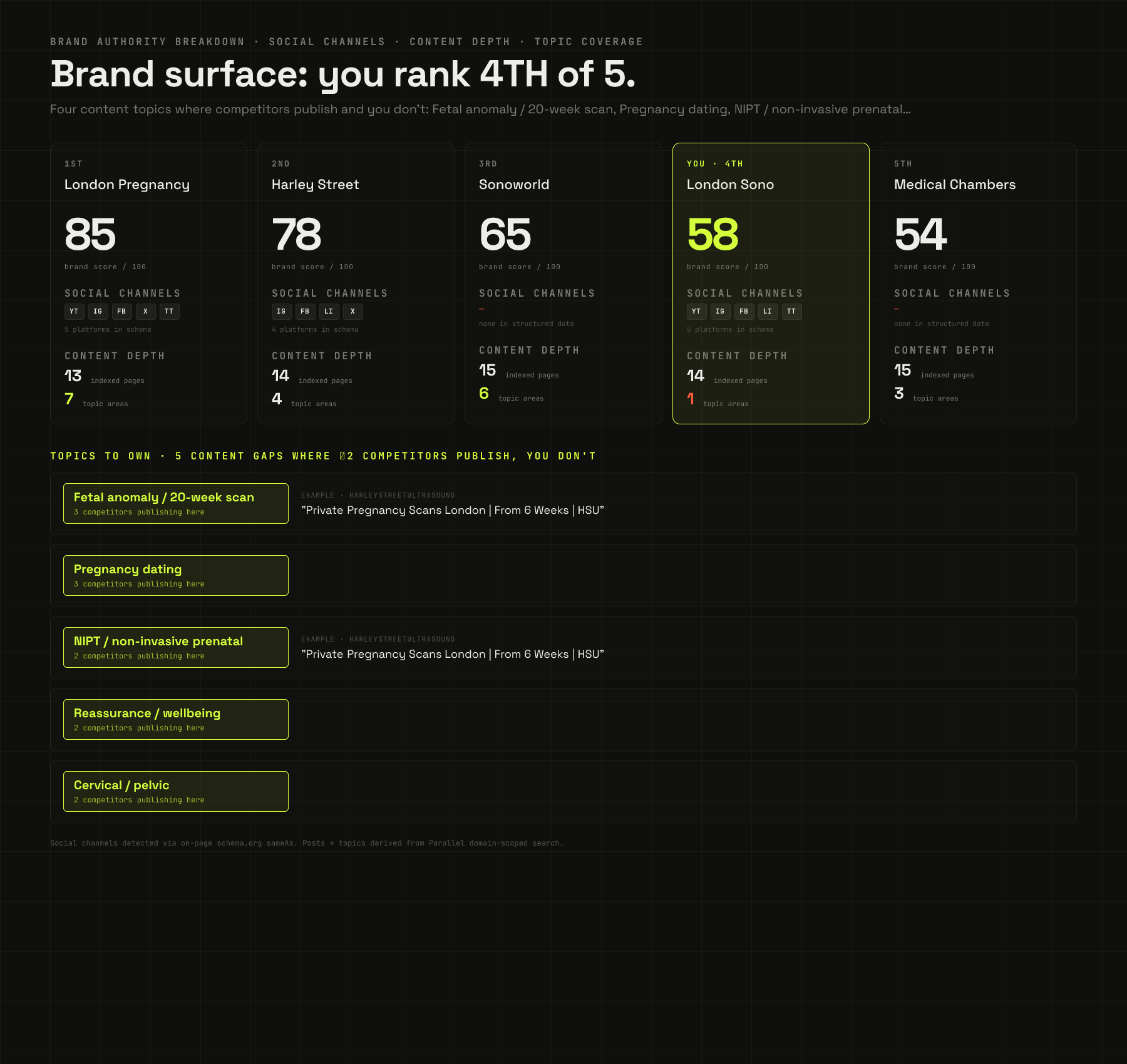
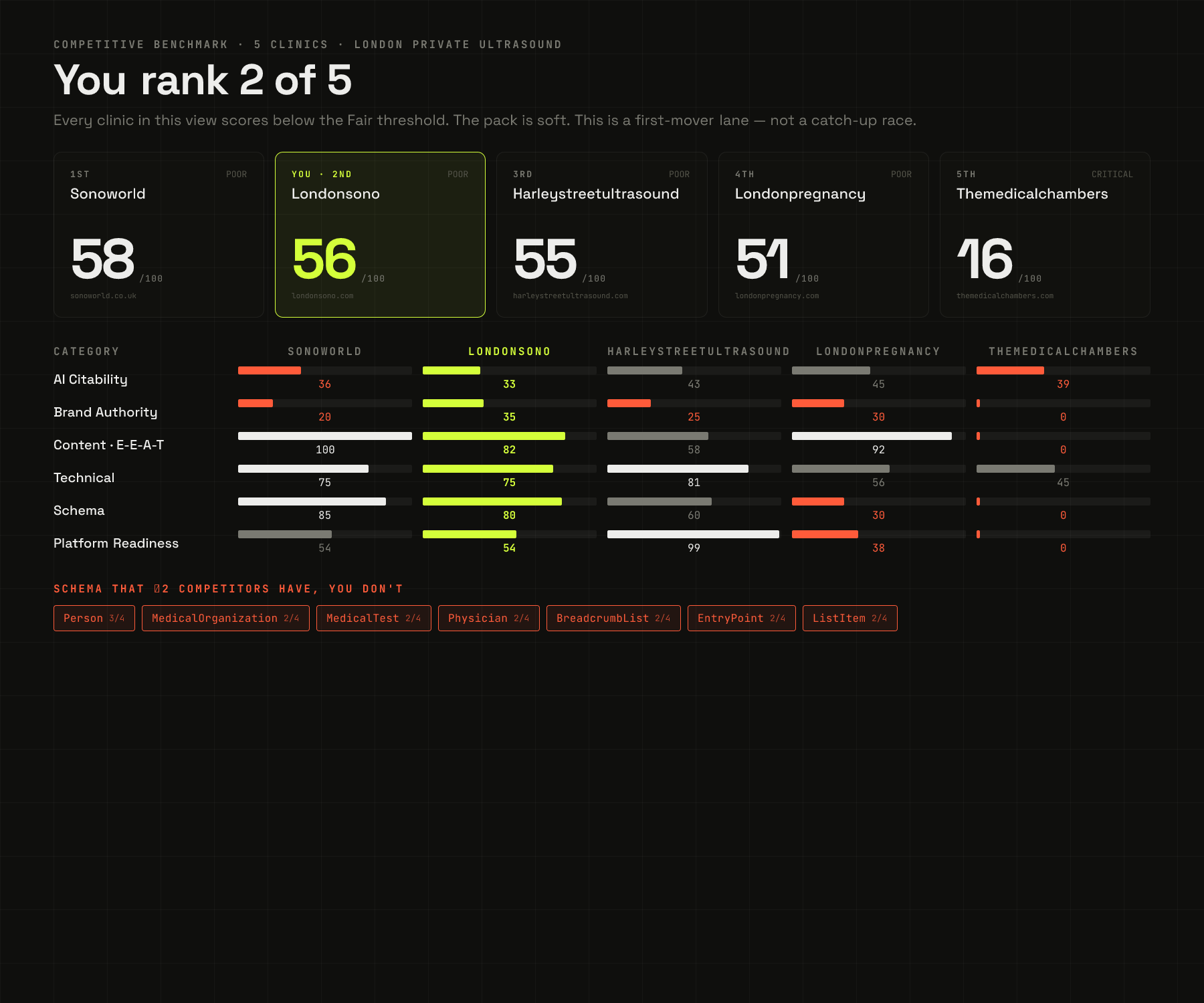
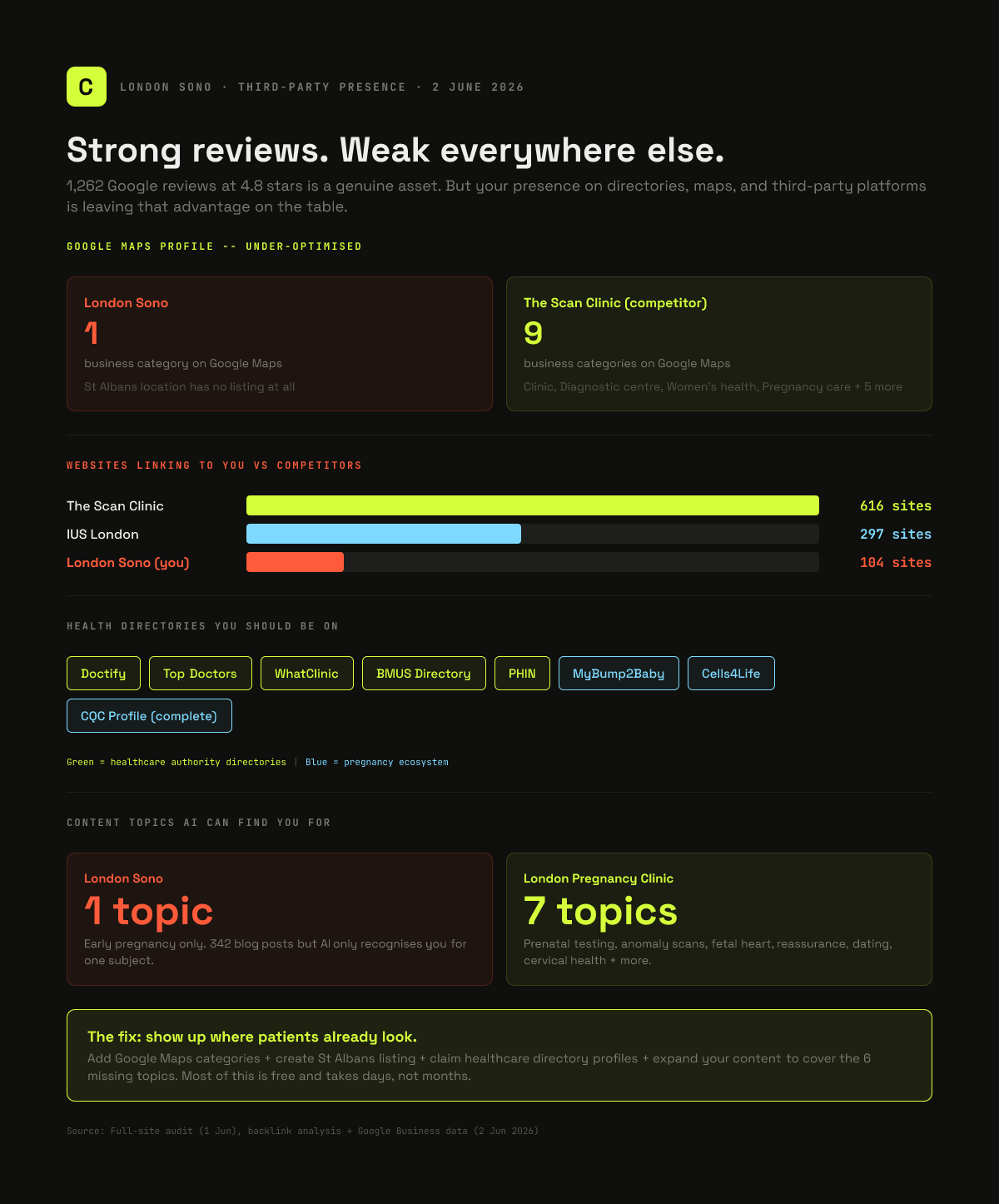
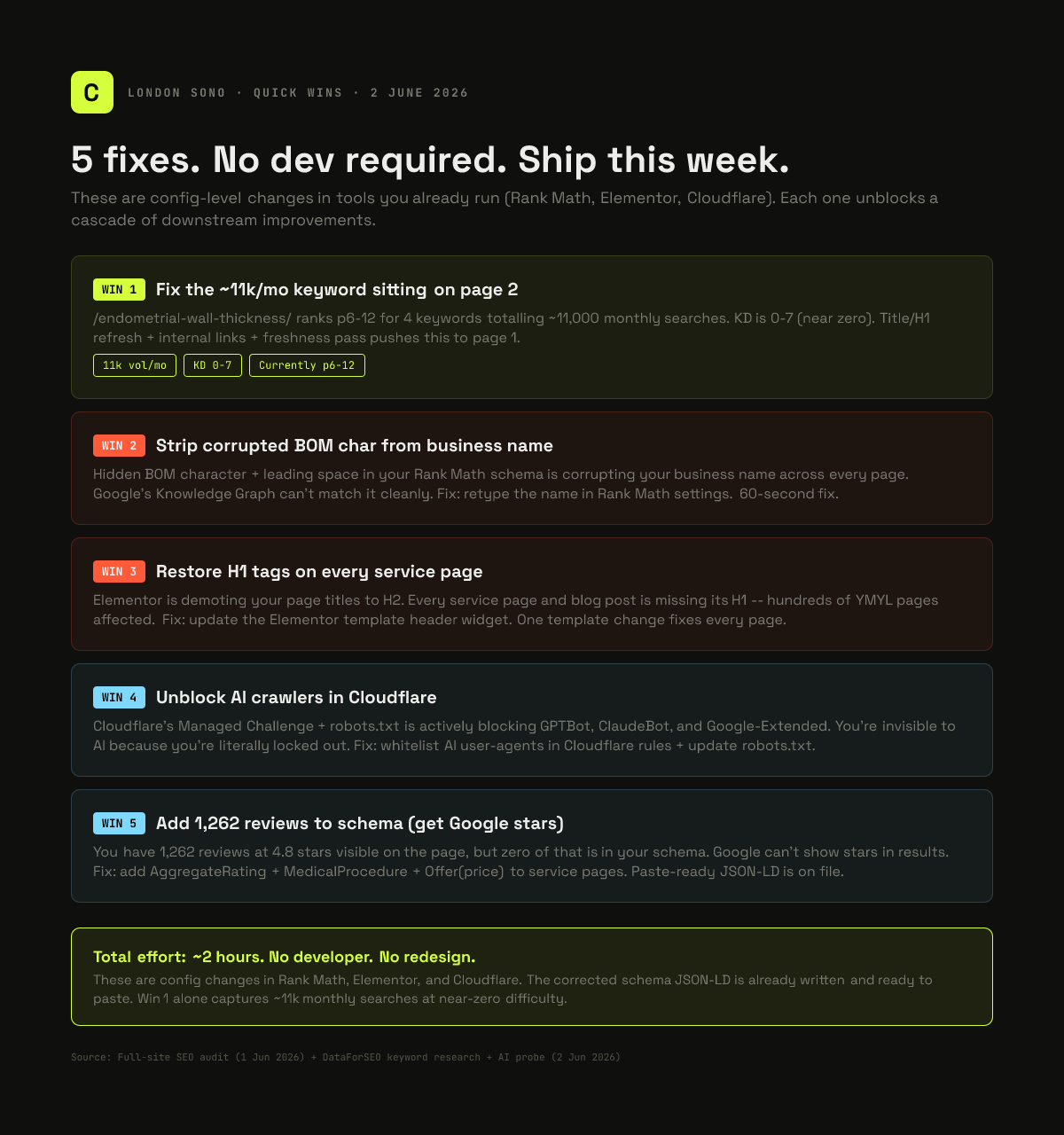
Client: London Sono — private ultrasound clinic in central London, specializing in pregnancy scans, diagnostic imaging, and women's health services.
Context: Head of Marketing reached out after noticing competitor dominance in Google's AI Overviews. Initial belief: "We rank top 3 for our keywords." Reality: zero AI citations across 10 test cells.
Outcome: Identified 4 quick-win fixes totaling +23 projected GEO points. Implementation package delivered same day with schema code, llms.txt template, and content attribution guide. Estimated 30-day timeline to move from Poor (56) to Good (79) tier — confirmed in follow-up audit.
Key insight: High content quality (82/100 E-E-A-T) doesn't guarantee AI visibility — technical citability signals matter more than marketing teams expect.